
Learning From the Wrong People
Why wisdom often arrives from the least expected places


Since the year is still young, allow me a brief moment of reflection.
In 2025, I read a book that revisited the reign of King Bhumibol Adulyadej, Thailand’s longest-serving monarch. He is, of course, a contested figure. Critics readily point to the way he quietly legitimised military coups, or to the strict lèse-majesté laws under which criticism of the monarchy became legally dangerous. Most people would not instinctively look to him for lessons.
And yet, viewed from another angle, his reign offers something quietly instructive. He championed a development-oriented monarchy, which went on to inspire thousands of rural projects in water management and sustainable agriculture, laying much of the groundwork for Thailand’s rise as an economic powerhouse. Another lesson comes from one of his oft-quoted remarks: “Learning is a never-ending process. Those who wish to advance in their work must constantly seek more knowledge, or they will lag behind and become incompetent.”
It rings true.
One should seek more in order to improve each year. But what became increasingly clear to me last year is that learning rarely arrives in neat, formal packages. More often, it sneaks up on you in strange, sideways ways. As long as it adds to your understanding of the world, it counts.
Take this past week. I finally learned how to use Discord.
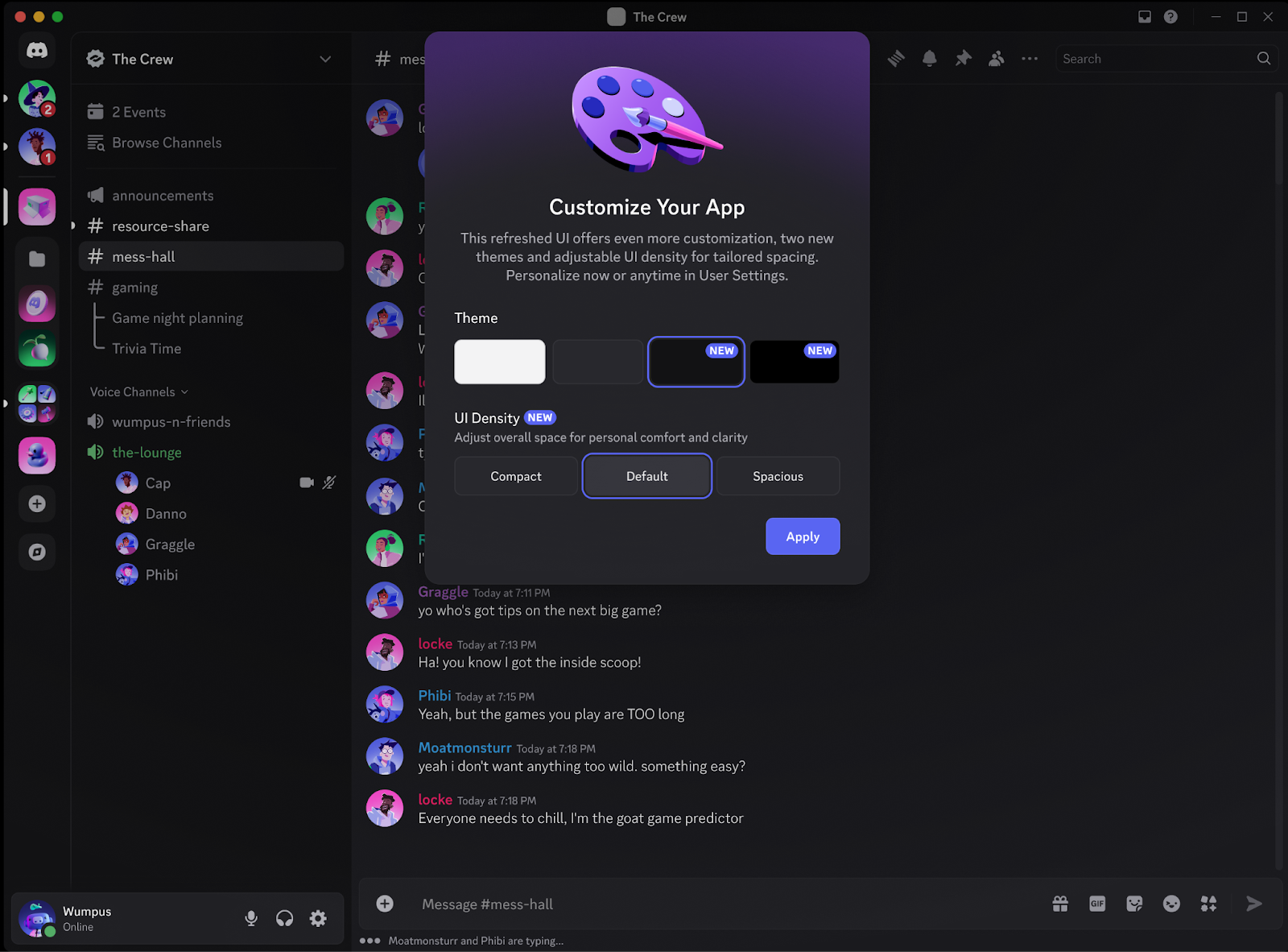
This was not part of my digital upskilling plan. In fact, I have reached the stage of life where adopting new socials feels like self-sabotage. Social media has a talent for disguising time theft, and I already have enough open tabs. X has had me since 2009. Instagram followed. TikTok remains, for now, firmly resisted. Discord, with its confusing interface that was designed specifically not for millennials, felt like a step too far.
And yet there I was, fumbling through channels and notifications, because a 57-year-old Indonesian football pundit known as Coach Justin decided to host a six-hour live commentary session there. I joined his YouTube membership out of habit. Discord arrived as an unintended consequence.
There is something quietly humbling about learning a new technology from someone who does not fit the Silicon Valley demographic template. Even more so when the person patiently explaining how to mute myself could reasonably be called a grandfather.

Somewhere in the process, the lesson landed. Learning, it turns out, does not always come from where you expect it.
Which brings us to Juju.
If the Instagram handle @makanlurrrr does not immediately register, that is entirely understandable. When you first land on his page, you may even raise an eyebrow. I certainly did. But bear with me for a minute.
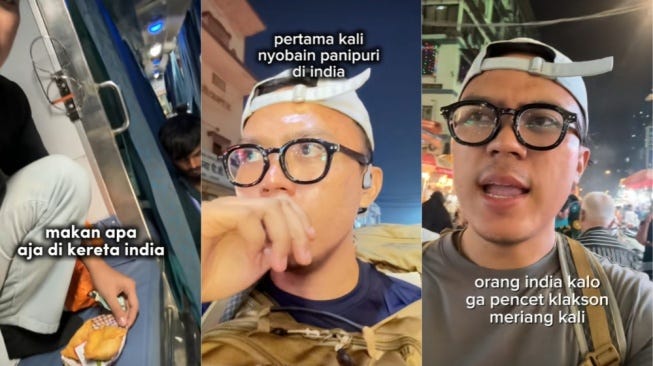
Juju is an Indonesian travel creator who does slapstick travel content. His humour is deliberately chaotic. He pulls faces. He complains loudly. He throws up on an Indian train. He stays in hotels that cost US$3.50 a night and resemble prisons more than accommodation.
Most people follow him for the jokes and chaos. But I think most people are missing the point.
For years, travel media has been stuck in a loop. The same drone shots. The same suspiciously identical adjectives from influencers who cannot be bothered to paraphrase. The sense of discovery is gone.
Juju breaks that pattern by going where comfort is optional. He does so not by being contrarian, but by being genuinely curious. Take this: in India, he visits a local water park rather than a pagoda. He asks why everyone swims fully clothed. He joins families who spend entire days there, ending with communal dancing until closing time. I learn how local leisure actually works.
In another video, instead of chasing postcard Mumbai, he walks past Mukesh Ambani’s heavily guarded residence and offers a social commentary on how its polished, honk-free street contrasts with the rest of the city. A few blocks away, he visits Shah Rukh Khan’s house, where crowds gather, laying out mats as if on pilgrimage. The contrast delivers the lesson. Power is guarded. Fame is shared.
And he is not stopping there. More recently, in Bangladesh, he befriends a local simply to ensure safe passage atop a train, then sleeps on a fisherman’s boat to show how people actually live. The theatrics—travelling in an Avatar costume, sampling food that predictably ends in nausea—are secondary. The real value lies in his willingness to discard comfort and show something unfiltered. You come away knowing more than you expected.
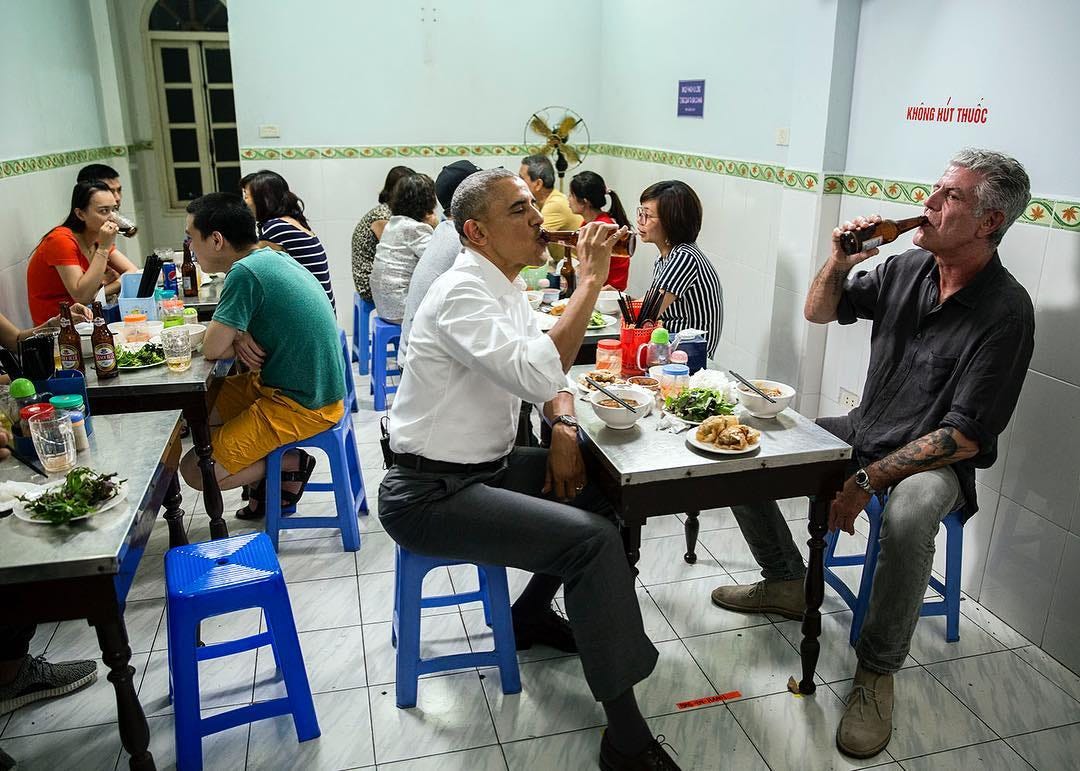
This is the kind of content I have been longing for. Content that teaches you something new, even when it arrives from mildly absurd sources. It carries the spirit of Anthony Bourdain, who sought meaning not in comfort but in friction. Even locally, we seem to have lost this. We once had programmes like Jalan-Jalan Men, which embraced unvarnished travel and allowed viewers to encounter places as they really were.
What strikes me most is that Juju does not present himself as a teacher. He is not instructive. He is not careful. He is often wrong. And yet, you learn.
Learning, it turns out, attaches itself to unexpected hosts. A monarch. A football pundit. A chaotic travel creator in an Avatar costume. Knowledge does not check credentials. The uncomfortable implication is this: if learning can come from anyone, then the responsibility to remain open sits squarely with us.
As I move into 2026, that may be the only resolution worth keeping. Knowledge, after all, has a habit of arriving from strange directions. The only real failure is not noticing when it does.